
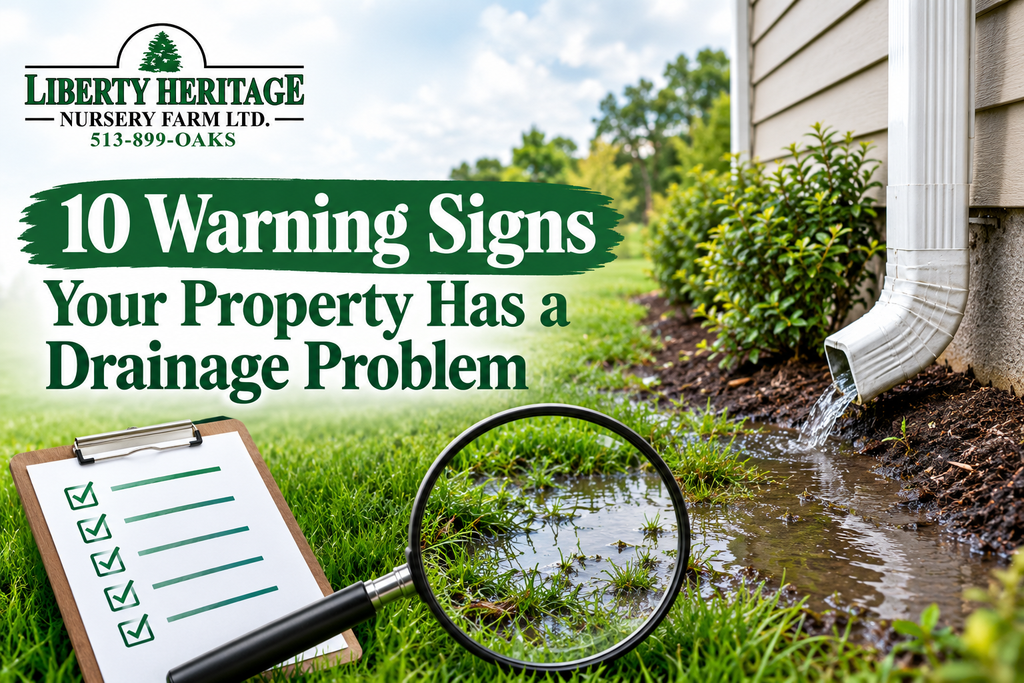
Standing water and soggy patches are the clearest indicators. If puddles linger for more than 24 hours after rain, or if the ground stays squishy days later, water is not percolating through the soil or draining away from the property. These surface symptoms are the easiest to spot and the first thing a landscape assessment should address.
Standing Water in the Yard
Pools that remain after rain, especially in low spots, mean the soil is saturated or compacted. A minor issue is water that lingers for less than a day after heavy rain. A serious drainage problem is standing water after light rain or water that stays put for more than 24 hours. That water has nowhere to go.
Soggy or Spongy Lawn Areas
If the grass feels squishy underfoot days after the last rain, the soil beneath is waterlogged. Healthy soil absorbs water and releases it slowly. Waterlogged soil drowns grass roots, which turns the lawn yellow and invites moss and algae to take over. A lawn that squelches when you walk on it is a lawn that is telling you something is wrong.
What Do Foundation Cracks Tell You About Drainage?
Cracks in your foundation, especially horizontal ones, are often a sign of hydrostatic pressure from waterlogged soil pressing against the walls. Water that pools near the foundation soaks into the soil, which swells and pushes inward. Over time, that pressure causes walls to bow and crack. Vertical cracks are common and often cosmetic. Horizontal cracks are a structural warning.
What Are the Signs of Drainage Problems Inside the Home?
Water stains on basement walls, a persistent musty odor, and bubbling paint are all signs that moisture is entering the structure. Efflorescence, the white powdery deposit on concrete walls, is another indicator. It forms when water carries salts through the concrete and evaporates on the surface. Any of these signs mean water is finding a path indoors.
Basement Water and Flooding
A wet basement is rarely a basement problem. It is almost always a drainage problem. Water that pools against the foundation will eventually find cracks, utility line passageways, or window wells. If your basement stays damp long after storms, or if water seeps up through the floor, the issue is outside the house, not inside it.
Musty Odors and Mold
A persistent musty smell in the basement or crawl space signals ongoing moisture. Mold and mildew need damp conditions to grow. If you smell that earthy, damp odor every time you go downstairs, water is getting in somewhere. Finding the drainage cause is the only way to fix it permanently.
Why Is Soil Erosion a Drainage Red Flag?
Erosion means water is moving across your property faster than the soil can absorb it. You will see exposed tree roots, bare patches where topsoil used to be, and mulch washing out of garden beds. Erosion near downspouts or along slopes is especially concerning because it means water is being discharged directly onto bare ground instead of being directed away.
What Other Warning Signs Should Homeowners Watch For?
Several less obvious signs point to drainage trouble. Pooling water on driveways and patios, water stains on ceilings, and even rodent or insect activity near the foundation can all trace back to excess moisture.
Water Pooling on Hardscape
Driveways, walkways, and patios should shed water. If puddles form on concrete or pavers and stay there, the surface is not graded properly. Water that sits on hardscape near the house will eventually seep into the soil against the foundation.
Pests and Rodents Near the Foundation
Termites, carpenter ants, and rodents are drawn to moisture. A damp crawl space or a soggy foundation line is an invitation. If you are seeing more pests than usual around the base of the house, moisture may be the underlying cause.
What Should You Do If You Spot These Signs?
Document what you see and when it happens. Note whether the problem appears after every rain or only during heavy storms. That pattern tells a drainage professional where to focus. The sooner you address the cause, the less damage the water does to your foundation, lawn, and landscape.
Liberty Heritage Nursery Farm handles drainage assessments and landscape grading for homeowners who want water moving away from the house, not toward it. We identify the source of the problem, recommend the right fix, and install solutions that protect the property long term. Reach out today to schedule a site evaluation.
FAQs
Q1: How long should water stand in a yard after rain before it is a problem?
Water that lingers for more than 24 hours after rain indicates a drainage problem. A minor issue is standing water for less than a day after heavy rainfall. A serious issue is standing water after light rain or water that remains for two days or more. Either way, the soil is not absorbing or redirecting water properly.
Q2: Can foundation cracks really be caused by poor drainage?
Yes. Water that pools against the foundation soaks into the soil, which expands and presses against the foundation walls. That pressure, called hydrostatic pressure, causes walls to bow and crack over time. Horizontal cracks are especially concerning because they signal structural movement.
Q3: What is efflorescence, and what does it mean?
Efflorescence is the white, powdery deposit that appears on concrete or masonry walls. It forms when water moves through the material, dissolves natural salts, and evaporates on the surface, leaving the salts behind. It is a clear sign that moisture is penetrating the foundation from outside.
Q4: Does soggy soil always mean I need a French drain?
No. Soggy soil can be caused by compacted ground, poor grading, or a high water table. A French drain helps with subsurface water, but surface grading or soil amendment may solve the problem for less money. A site assessment determines the right fix.
Q5: How much does it cost to fix a yard drainage problem?
Costs vary widely by solution. Regrading a yard runs $1,000 to $3,000. A French drain costs $10 to $100 per linear foot installed. Dry wells and catch basins run $500 to $2,500. Simple soil amendment and aeration are the cheapest options, often under $500. The right solution depends on what is causing the water to sit.