
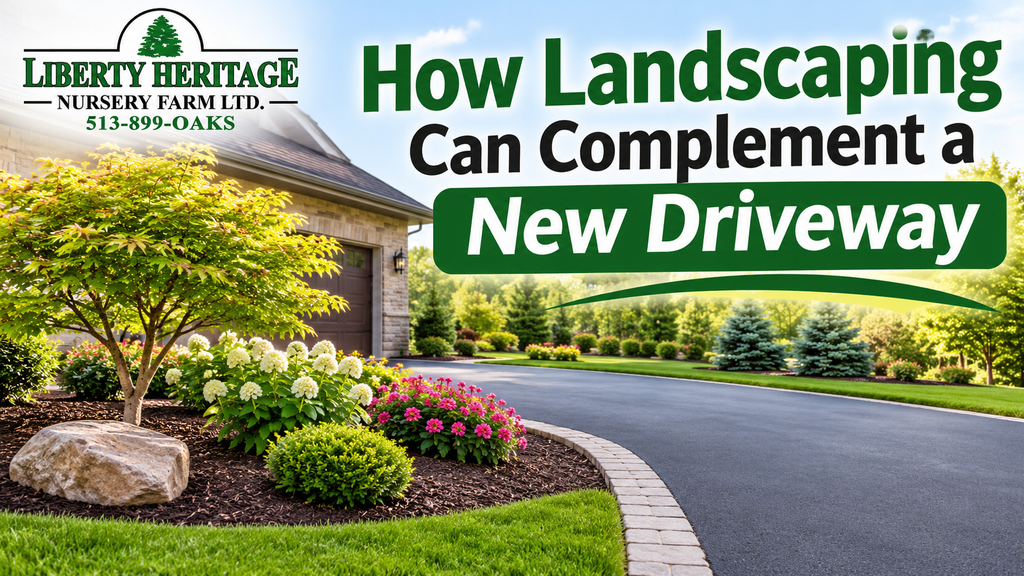
A new driveway gets noticed on its own, but it looks unfinished, sitting in bare ground with nothing around it. The transition between hard surface and lawn, the planting along the edges, and the lighting after dark all decide whether the driveway looks like a planned feature or a slab dropped onto the property. Landscaping is what turns it into an entrance.
Below, we cover the design choices that work best alongside a new driveway, from edging and planting to drainage and lighting.
Why Landscaping Matters Around a Driveway
The driveway is the first thing anyone experiences when arriving at a home. It also covers a large area of hard surface, which changes how water moves, how heat builds, and how the yard reads from the street.
Softening Hard Edges
A driveway without planting around it looks abrupt. Beds, borders, and ground covers soften the transition between pavement and lawn. They also break up the visual weight of a large paved area.
Managing Water and Runoff
Hard surfaces send water somewhere. Without planning, that water runs toward the foundation, pools at the base of the driveway, or erodes the lawn. Landscaping around the driveway gives water a place to go.
Improving Curb Appeal and Value
A well-designed driveway with matching landscaping improves how the property looks from the street and how it feels when someone arrives. That first impression affects property value and how quickly a home sells.
Start With Edging and Borders
Edging defines where the driveway ends and the yard begins. It is the simplest change that makes a driveway look finished.
Choose Materials That Match
Brick, stone, or concrete edging that complements the driveway surface creates a cohesive look. Contrast works too. A paver driveway with brick edging reads as deliberate. A concrete driveway with bluestone accents adds visual interest without overwhelming the design.
Keep Beds Separate From Pavement
Bed edging keeps mulch and soil out of the driveway and keeps the pavement edge from crumbling. It also makes maintenance easier because the boundary between surfaces is clear.
Planting Along the Driveway
Planting is where most of the visual impact happens. The key is choosing plants that suit the site rather than filling every inch with greenery.
Evergreen Shrubs for Structure
Boxwood, holly, yew, and similar evergreens line a driveway with year-round structure. They stay green through winter and require only periodic trimming. Their regularity gives the entrance a polished appearance.
Seasonal Color in Beds
Flower beds along the driveway add color through the growing season. Perennials like coneflower, black-eyed Susan, and lavender attract pollinators and return each year. Bulbs planted in fall bring early spring color before other plants wake up.
Ground Covers for Low Maintenance
Creeping thyme, moss, and low-growing sedums fill the gaps between pavers or along the driveway edge. They suppress weeds, reduce erosion, and soften the transition between the hard surface and the garden.
Trees for Vertical Interest and Shade
A well-placed tree frames the driveway and adds height. Choose species with non-aggressive roots to avoid damaging the pavement. Trees should be positioned so mature canopies do not drop sap or debris onto vehicles.
Using Mulch and Gravel Beds
Not every area beside a driveway needs plants. Mulch and gravel beds provide a clean, low-maintenance edge that looks intentional.
Benefits of Mulch
Mulch retains soil moisture, suppresses weeds, and moderates soil temperature. Organic mulch breaks down over time and adds nutrients to the soil. It needs refreshing every year or two to maintain its appearance.
Gravel for Drought-Tolerant Areas
Gravel beds work well in dry areas or where planting is not practical. They drain quickly, resist weeds when installed over landscape fabric, and pair well with ornamental grasses and succulents. Gravel requires occasional raking to stay level.
Lighting for Safety and Appearance
Driveway lighting serves two purposes. It guides vehicles at night, and it makes the property look finished after dark.
Path and Edge Lighting
Low-voltage path lights along the driveway edge illuminate the boundary without glare. They help drivers see where the pavement ends and where the lawn begins. Solar options reduce wiring requirements.
Accent Lighting for Trees and Features
Uplighting at the base of trees or architectural features adds depth and drama. It highlights landscaping after sunset and draws attention to the design rather than just the pavement.
Safety Considerations
Proper lighting reduces the risk of trips and falls on walkways. It also helps drivers avoid backing into plantings or walking into landscape features. Warm-toned LEDs work well in both modern and traditional designs.
Handling Drainage Around a Driveway
Water management is where landscaping and driveway design intersect most critically.
Grading and Slope
The ground beside the driveway should slope away from the pavement and away from the house. Poor grading sends water onto the driveway, where it pools and freezes in winter.
Swales and Rain Gardens
A shallow swale channels water away from the driveway to a place where it can soak in. Rain gardens planted with native species capture runoff and filter it before it reaches storm drains. Both reduce erosion and standing water.
Permeable Materials
Gravel, permeable pavers, and porous concrete let water pass through rather than run off. These work well for secondary paths, edging strips, and areas where pooling is a problem.
Final Thoughts
A driveway does not exist in isolation. The planting, edging, lighting, and drainage around it determine whether it looks like part of a designed landscape or a surface added as an afterthought. Match the edging to the pavement, choose plants for the site rather than the photograph, use lighting to define the space after dark, and plan drainage before planting. The driveway carries the function. The landscaping around it carries the appearance.
FAQs
1. Should landscaping be installed before or after the driveway?
The driveway should go in first, then the landscaping. Heavy equipment damages young plantings and newly laid beds. Edging and lighting conduit are easier to install while the driveway is being built, so coordinate both projects together.
2. What plants work well along a driveway?
Evergreen shrubs like boxwood and holly provide year-round structure. Perennials add seasonal color. Ground covers fill gaps between pavers. Choose species suited to the light and soil conditions along that side of the property.
3. How far from the driveway should trees be planted?
Keep trees far enough away that mature roots will not lift or crack the pavement. The distance depends on the species. Fast-growing trees with aggressive roots need more space than slow-growing ornamentals.
4. Does driveway landscaping help with drainage?
Yes. Grading, swales, rain gardens, and permeable materials all direct water away from the pavement and the house. Poor drainage causes pooling, erosion, and ice buildup in winter.
5. Is mulch or gravel better for driveway beds?
Mulch holds moisture and improves soil over time, which suits planting beds. Gravel drains faster and works better in dry areas or where plants are not practical. Both suppress weeds when installed correctly.