
Poor drainage is one of the most common problems homeowners face. Standing water, soggy grass, soil erosion, and foundation damage can quickly turn a beautiful yard into a maintenance nightmare. The good news is that understanding how to improve drainage in your landscape can prevent costly repairs and protect your property over the long term.
Water should move away from your home in a controlled and natural way. When it doesn’t, it creates structural issues, root rot, mosquito breeding grounds, and lawn damage. Whether your yard suffers from heavy clay soil, poor grading, or compacted ground, there are proven solutions that can dramatically improve performance.
This guide walks you through the causes of drainage issues, DIY fixes, material solutions, and professional systems that deliver lasting results.
Why Proper Landscape Drainage Matters
Drainage isn’t just about preventing puddles. It protects your home’s foundation, preserves plant health, and prevents erosion that can destabilize patios, walkways, and driveways.
When water collects in the wrong places, it can:
- Damage foundations and basement walls
- Kill grass and plants due to root suffocation.
- Wash away topsoil and nutrients.
- Create muddy, unusable yard spaces.
- Attract insects and pests.
If left untreated, drainage problems get worse over time. That’s why acting early is critical.
What Causes Drainage Problems in Landscapes?
Before applying solutions, it’s important to identify the cause. Most drainage issues fall into a few common categories.
1. Compacted Soil
Over time, soil becomes compressed from foot traffic, machinery, or natural settling. Compacted soil prevents water from penetrating properly.
Clay soil is particularly problematic because it retains water rather than allowing it to drain.
2. Poor Yard Grading
Your landscape should slope gently away from your home. If it slopes toward the foundation, water naturally flows in the wrong direction.
Even small grading mistakes can cause pooling.
3. Hardscaping Without Permeability
Concrete patios, driveways, and walkways do not absorb water. Without proper runoff channels, water accumulates nearby.
4. Clogged or Short Downspouts
Gutters that discharge water directly near the foundation can overwhelm the soil’s absorption capacity.
Simple DIY Solutions to Improve Drainage
Some drainage issues can be resolved with straightforward fixes before installing full drainage systems.
Aerate Your Lawn
Aeration creates small holes in compacted soil, allowing water and nutrients to penetrate deeper.
Benefits include:
- Reduced surface runoff
- Improved root growth
- Better soil oxygen flow
- Healthier grass
Core aeration once or twice a year can significantly reduce minor drainage issues.
Add Organic Matter to Soil
If your soil is heavy clay, incorporating compost improves its structure and drainage capacity.
Mixing organic matter helps:
- Break up compacted soil
- Increase permeability
- Improve plant health
- Encourage beneficial microbes
Avoid simply adding sand alone. Sand without organic material can worsen compaction.
Extend Downspouts
Redirecting roof water away from the foundation is one of the easiest fixes.
You can:
- Install downspout extensions
- Use splash blocks
- Connect to underground drain pipes.
This prevents concentrated water pooling near your home.
Grading and Leveling Your Yard
One of the most effective solutions for serious drainage issues is to correct your yard’s slope.
Proper grading ensures water flows naturally away from structures. The ground should slope at least 6 inches over the first 10 feet away from your foundation.
Grading may involve:
- Adding topsoil to raise low areas
- Removing excess soil in high spots
- Re-shaping lawn contours
For larger properties or severe issues, professional yard grading services may be required.
Installing a French Drain
A French drain is one of the most popular and effective landscape drainage systems.
It works by collecting water in a gravel-filled trench containing a perforated pipe that redirects water away from problem areas.
How a French Drain Works
- A trench is dug along the drainage path.
- Landscape fabric lines the trench
- Gravel is placed at the bottom.
- A perforated pipe is installed.
- Additional gravel covers the pipe.
- The trench is covered with soil or decorative stone.
This system collects underground water and redirects it to a safer location.
French drains are ideal for:
- Persistent soggy areas
- Water is collecting near the foundations.
- Yard slopes where runoff needs control
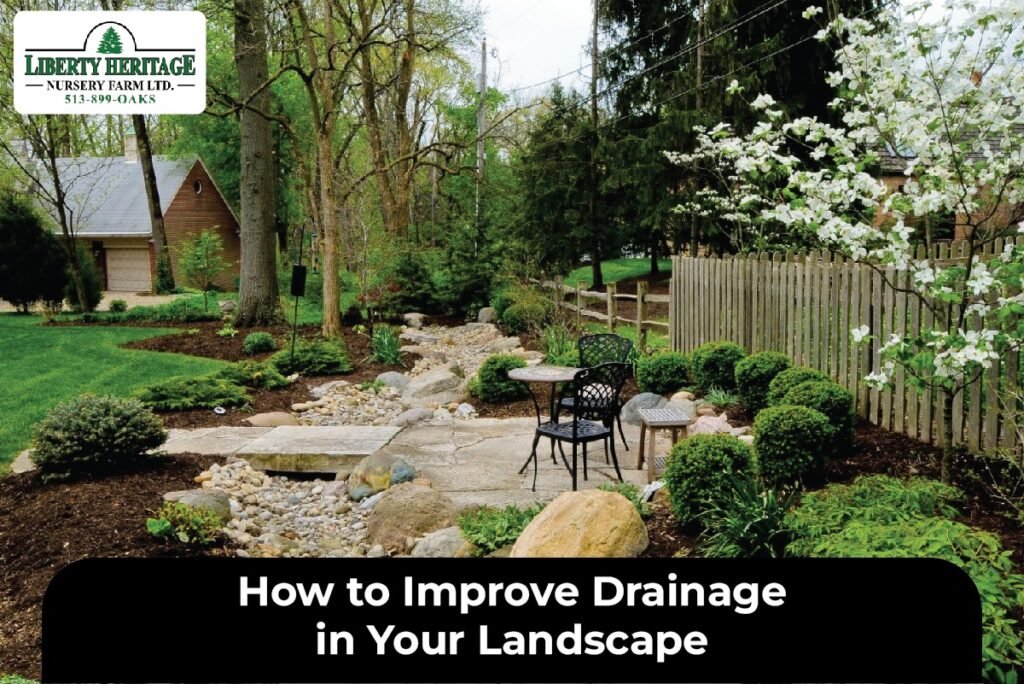
Dry Creek Beds: Functional and Beautiful
Dry creek beds combine aesthetics and functionality. They mimic natural water channels while safely directing runoff.
A properly installed dry creek bed:
- Slows water flow
- Prevents soil erosion
- Enhances visual appeal
- Requires minimal maintenance
Using decorative stone and drainage gravel creates both a practical and attractive feature.
Using Gravel and Stone to Improve Drainage
Gravel is one of the most reliable materials for promoting water movement in landscapes.
Drainage gravel for landscaping allows water to pass through rather than pool.
Common uses include:
- Gravel borders along foundations
- Under patio bases
- Beneath pavers
- Around downspout exits
- In rain gardens
Crushed stone, river rock, and pea gravel are commonly used depending on the design.
Permeable Pavers and Hardscaping Solutions
Traditional concrete traps water on the surface. Permeable pavers allow water to seep between joints into the ground below.
Benefits include:
- Reduced runoff
- Lower erosion risk
- Increased groundwater recharge
- Cleaner surface drainage
Permeable systems are especially useful for driveways, walkways, and patios.
Rain Gardens: Natural Drainage Solutions
Rain gardens are shallow depressions planted with native plants that collect runoff and allow it to percolate into the soil.
They are effective for:
- Managing roof runoff
- Reducing erosion
- Supporting native plants
- Improving environmental health
Water-tolerant plants thrive in rain gardens while naturally absorbing excess moisture.
Advanced Drainage Systems
For severe drainage problems, more comprehensive systems may be required.
These can include:
- Catch basins
- Underground drainage pipes
- Sump discharge lines
- Channel drains
- Complete yard re-grading
Professionals typically install these systems to ensure proper slope and performance.
Long-Term Maintenance Tips
Even the best drainage systems require occasional upkeep.
To maintain optimal performance:
- Inspect drains seasonally
- Remove debris from gravel areas.
- Clean gutters regularly
- Check for pipe blockages.
- Monitor for new low spots.
Routine inspection prevents small problems from becoming costly repairs.
Common Drainage Mistakes to Avoid
Improper solutions can worsen water issues.
Avoid these errors:
- Installing drains without a proper slope
- Using the wrong type of gravel
- Ignoring soil compaction
- Planting water-sensitive plants in wet areas
- Allowing runoff to flow toward neighbors
Planning carefully ensures your drainage system works effectively.
Final Thoughts
Understanding how to improve drainage in your landscape is essential for protecting your property and creating a functional outdoor space. Whether you choose simple soil improvements, install gravel systems, or invest in professional drainage solutions, the right approach depends on your yard’s specific challenges.
Water management is not just about solving current problems—it’s about preventing future damage. With proper grading, quality materials, and smart design, you can transform a soggy, problem-prone yard into a durable and beautiful landscape that performs efficiently year-round.
FAQs
Q1: What is the best way to improve drainage in a yard?
Ans: The best way depends on the cause. Aeration and soil improvement help minor issues, while French drains and grading fix more severe drainage problems.
Q2: How deep should a French drain be?
Ans: Most French drains are 18 to 24 inches deep, depending on water volume and soil conditions.
Q3: Can I improve drainage without digging?
Ans: Yes, aerating soil, adding compost, and extending downspouts can improve minor drainage issues without major excavation.
Q4: What type of gravel is best for drainage?
Ans: Washed gravel or crushed stone is ideal because it allows water to flow freely without clogging.
Q5: How do I fix drainage in clay soil?
Ans: Incorporate organic matter, aerate regularly, and consider installing a French drain if water pooling persists.