
Modern homeowners are busier than ever, and maintaining a lush yard can quickly become a time-consuming chore. Add Ohio’s unique climate—with hot, humid summers and cold, snowy winters—and it’s easy to see why many yards struggle to look their best.
Low-maintenance landscaping isn’t about sacrificing beauty. Instead, it’s about intelligent design, the right plant choices, and strategic hardscape features that allow your yard to thrive with minimal effort. From native plants to hardy perennials, mulch beds to functional patios, there are countless ways to create a beautiful outdoor space without spending every weekend mowing, watering, or weeding.
This guide explores the best low-maintenance landscaping ideas for busy homeowners in Ohio, helping you save time, reduce upkeep, and still enjoy a stunning yard.
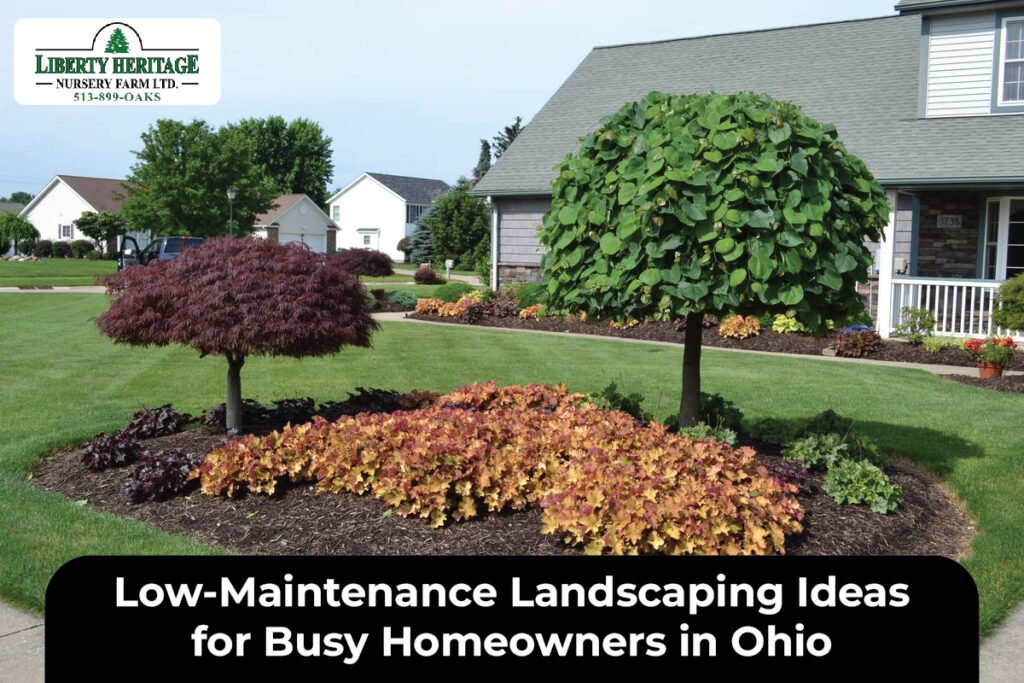
1. Embrace Native and Climate-Adapted Plants
Native plants are the cornerstone of low-maintenance landscaping because they are naturally adapted to Ohio’s soil, rainfall, and temperature variations. Once established, they require minimal watering, fertilization, or pest control.
Benefits of Native Plants
- Thrive in Ohio soil and climate.
- Support pollinators and local wildlife.
- Require less water and fertilizer.
- Resistant to local pests and diseases.
Popular Low-Maintenance Ohio Natives:
- Purple coneflower (Echinacea purpurea)
- Black-eyed Susan (Rudbeckia hirta)
- Little bluestem grass (Schizachyrium scoparium)
- Serviceberry shrubs (Amelanchier spp.)
Design Tip: Group plants with similar sunlight and water needs together to simplify care and irrigation.
2. Replace Lawns with Groundcovers
Traditional lawns require constant mowing, watering, and fertilization. A smart alternative is using groundcovers, which reduce maintenance while adding texture and color to your yard.
Low-Maintenance Groundcovers for Ohio
- Creeping thyme
- Clover varieties
- Sedum
- Creeping Jenny
Advantages:
- Suppress weed growth
- Retain soil moisture
- Reduce mowing and fertilization needs.
Groundcovers are ideal for slopes, borders, or areas where grass struggles to thrive, creating a lush yet low-maintenance landscape.
3. Mulch for Weed Control and Soil Health
Mulch is a simple yet highly effective way to reduce yard maintenance. Adding mulch to planting beds and around trees can save countless hours over the season.
Why Mulch Works
- Reduces weeds by blocking sunlight
- Retains soil moisture during hot summers
- Improves soil fertility as it breaks down
- Protects plant roots during winter
Recommended Mulches: Organic bark, shredded wood, cocoa hulls, or recycled mulch. Apply a 2–3-inch layer around plants and refresh annually.
4. Install Hardscape Features
Hardscaping is a practical way to reduce maintenance while enhancing your yard’s aesthetic appeal. Replacing some grass areas with hardscape elements reduces mowing, watering, and trimming.
Popular Low-Maintenance Hardscapes
- Stone patios and walkways
- Retaining walls with perennial beds
- Gravel or decomposed stone pathways
- Raised stone planting beds
Benefits:
✔ Durable and weather-resistant
✔ Reduces lawn areas that need constant attention
✔ Creates defined outdoor living spaces
5. Use Containers for Flexible Planting
Container gardens are ideal for busy homeowners who want seasonal color with minimal labor.
Advantages of Container Gardening
- Plants are easy to move for sunlight or winter protection
- Soil and watering needs are contained.
- Reduces weeding and digging
Containers can hold perennials, herbs, or flowering annuals, giving flexibility and aesthetic variety without demanding yard work.
6. Focus on Perennials Over Annuals
Perennials return year after year, reducing the need for replanting and repeated care. They provide long-term structure and stability to your landscape.
Easy Perennials for Ohio Yards:
- Daylilies
- Coneflowers
- Ornamental grasses
- Hostas
Tips: Plant in clusters for a fuller look and to reduce the frequency of mulching and watering.
7. Choose Drought-Tolerant and Deer-Resistant Plants
Ohio summers can be hot, and many areas see drought-like conditions. Selecting plants that tolerate dry periods reduces irrigation demands. Deer-resistant plants also reduce the need for repeated effort and replacement costs.
Examples:
- Lavender
- Sedum
- Yarrow
- Ornamental grasses
Tip: Pair drought-tolerant plants with mulch to enhance soil moisture retention.
8. Incorporate Smart Irrigation Systems
Automated watering systems save time and water while keeping your plants healthy.
Options:
- Drip irrigation for shrubs and beds
- Soaker hoses for lawns and borders
- Wi-Fi-connected timers for precise control.
Smart irrigation ensures your yard gets consistent water without daily attention.
9. Create Functional Outdoor Spaces
Reducing grass doesn’t mean reducing beauty. Transform some areas into outdoor living spaces, such as
- Rock or stone patios
- Seating areas with fire pits
- Gravel pathways
These areas require minimal upkeep while increasing usability and enjoyment.
10. Low-Maintenance Lighting and Accessories
Adding solar or LED lighting enhances curb appeal and safety without the maintenance burden.
Benefits:
- No wiring or electricity bills
- Easy installation
- Minimal upkeep
Lights can highlight pathways, seating areas, or focal points, making your landscape functional at night.
Conclusion
Low-maintenance landscaping in Ohio is about wise choices: selecting native and drought-tolerant plants, using groundcovers and mulch, incorporating hardscapes, and leveraging automation. By combining these strategies, busy homeowners can enjoy a vibrant, attractive yard without spending hours every week on upkeep.
Your landscape can look beautiful year-round while saving time, effort, and long-term costs. Thoughtful planning today makes your yard a low-maintenance oasis for years to come.
FAQs
Ans: Low-maintenance landscaping reduces mowing, watering, and pruning by using hardy plants, mulch, groundcovers, and hardscape features.
Ans: Yes. Groundcovers like creeping thyme, clover, and sedum reduce mowing, retain soil moisture, and suppress weeds.
Ans: Hardscape features such as patios, stone paths, and retaining walls replace grass or high-maintenance planting areas, reducing maintenance significantly.
Ans: Daylilies, coneflowers, ornamental grasses, and hostas are hardy and return each year with minimal effort.
Ans: Typically, once per season or once per year, depending on the material and decomposition rate.