
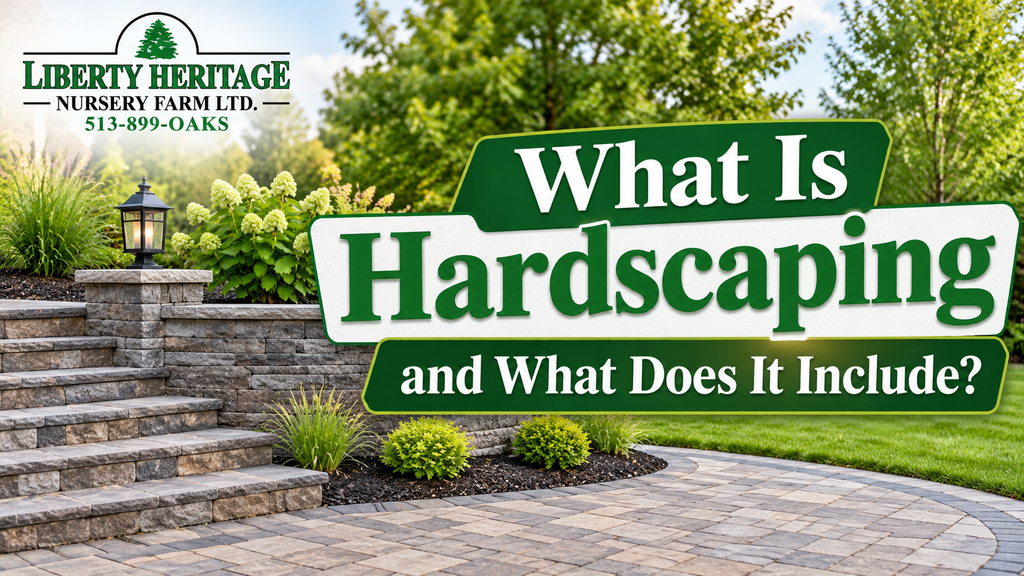
Walk outside and look at your yard. Some of what you see grows. Grass, shrubs, flowers, and trees are all living things that change with the seasons. Other parts of the yard do not grow at all. The patio, the walkway to the front door, the retaining wall holding back a slope, and the driveway where the car sits. Those are built features, and together they make up what the landscaping industry calls hardscaping.
This article explains what hardscaping is, what features fall under the term, the materials used to build them, and how hardscaping works alongside a landscape’s living elements.
Hardscaping Explained in Simple Terms
Hardscaping refers to the non-living, built elements of a landscape. Anything constructed from stone, concrete, brick, gravel, or wood is hardscape. Anything that grows from the ground is a softscape; the two work together, but they serve different purposes.
Softscaping adds color, texture, and life. Hardscaping provides structure. It gives the yard shape, defines where people walk and gather, and holds soil in place on uneven ground. A lawn alone leaves a yard undefined. Add a walkway, a patio, and a retaining wall, and the same space suddenly has purpose.
Common Features Included in Hardscaping
Hardscaping covers a wide range of built features. Most properties include at least a few of them, even if the homeowner never used the word.
Patios
A patio creates a flat, stable surface for outdoor furniture, dining, and entertaining. It anchors the backyard and becomes the centerpiece of outdoor living. Patios are built from pavers, natural stone, poured concrete, or brick, and they can be shaped to fit any yard or design style.
Walkways and Pathways
Walkways connect different areas of a property and guide foot traffic across the yard. A clear path keeps guests from cutting through garden beds and protects the lawn from wear. Materials range from concrete pavers to gravel to natural stone, and the choice depends on the look and the amount of traffic the path will carry.
Retaining Walls
Retaining walls hold soil in place on sloped ground. They prevent erosion, manage drainage, and turn unusable slopes into flat, usable space. Many retaining walls also double as seating or raised planting beds, which makes them both functional and attractive. Without proper retaining, a hillside yard can become a muddy mess after heavy rain.
Driveways
The driveway is the first hardscape feature most people notice. It sets the tone for the property and handles the heaviest traffic of any surface on the lot. Concrete pavers, poured concrete, asphalt, and gravel are all common driveway materials, each with different maintenance needs and appearance.
Steps and Stairs
Steps connect different levels of a yard, especially on properties with elevation changes. Outdoor stairs need to handle weather, foot traffic, and drainage, which makes material selection and installation important. Poorly built steps become a safety hazard quickly.
Outdoor Kitchens and Fire Features
Outdoor kitchens and fire pits extend the usable life of a backyard. They create gathering spaces and add a focal point to the design. Built-in grills, counters, and fireplaces are constructed from masonry materials that hold up to weather and heat. These features blur the line between indoor living and outdoor space.
Pergolas and Shade Structures
Pergolas, arbors, and shade structures add vertical elements to a landscape. They define outdoor rooms, provide partial shade, and support climbing plants. Wood and metal are the most common materials, and the structure itself counts as hardscape even when it is covered in vines.
Water Features
Fountains, ponds, and constructed waterfalls use stone and masonry to create movement and sound. The structure that surrounds the water is hardscape, while the water itself is considered softscape in some design frameworks. Either way, the built portion requires careful installation to prevent leaks and drainage issues.
Materials Used in Hardscaping
The material you choose affects appearance, durability, cost, and maintenance. Each option has trade-offs worth understanding before making a decision.
Concrete Pavers
Concrete pavers are one of the most versatile options. They come in many colors, shapes, and textures, and they can mimic the look of natural stone or brick. Individual pavers can be replaced if one cracks, which makes repairs simple. Installation quality matters, though, since a poor base causes shifting and uneven surfaces.
Natural Stone
Natural stone includes granite, bluestone, flagstone, and fieldstone. Each piece is unique, which gives the finished surface a look that manufactured materials cannot fully copy. Stone is durable and long-lasting, but it costs more and requires experienced installation.
Brick
Brick offers a classic appearance that pairs well with traditional architecture. It holds up well over time and resists wear. In regions with repeated freezing and thawing, brick selection matters, since not every brick performs equally in cold weather.
Poured Concrete
Poured concrete provides a continuous surface and works well for larger areas. It is often economical compared to other options. The downside is cracking, which happens when site preparation, drainage, or installation is not handled correctly.
Gravel
Gravel works well for paths, drainage areas, and informal designs. It is affordable and permeable, which helps with water management. Gravel also migrates over time, so it needs periodic replenishment and edging to stay in place.
Wood
Wood appears most often in pergolas, arbors, and decks. It has a warm, natural look that blends with plantings. Wood requires more maintenance than masonry and can deteriorate when exposed to moisture over time.
How Hardscaping and Softscaping Work Together
The best landscapes balance hardscape and softscape rather than treating them as separate projects. Planting beds soften the edges of a patio. A retaining wall creates new flat ground for garden beds. A walkway leads the eye toward a specimen tree.
Without hardscape, a yard can feel unstructured and difficult to use. Without softscape, a yard feels bare and harsh. The combination creates a space that is both functional and pleasant to spend time in. That balance is what separates a well-designed landscape from a collection of disconnected features.
Final Thoughts
Hardscaping gives shape and function to outdoor spaces. Patios, walkways, retaining walls, driveways, and fire features turn a plain yard into a usable extension of the home. They also add durability and reduce the amount of lawn that needs mowing, watering, and fertilizing. If your yard feels unfinished or difficult to use, hardscaping is often the missing piece. Start by looking at how you want to move through the space and where you want to gather, and the right features will follow from there.
FAQs
1. Is a patio considered hardscaping?
Yes. A patio is one of the most common hardscape features. Any built surface made from pavers, stone, concrete, or brick qualifies as hardscape, whether it sits in the backyard or the front.
2. What is the difference between hardscaping and softscaping?
Hardscaping covers built, non-living elements like patios, walls, and walkways. Softscaping covers living elements like grass, trees, shrubs, and flowers. A complete landscape design uses both.
3. Does hardscaping increase property value?
It can. Well-designed and properly installed hardscape features improve curb appeal and make outdoor space more usable. Buyers tend to value functional outdoor living areas, though the actual return depends on the project, the neighborhood, and the quality of installation.
4. Is hardscaping expensive?
Cost depends on the project. A short walkway costs far less than a full outdoor living area with a patio, retaining walls, and a fire feature. Material choice, site preparation, and drainage requirements all affect the total.
5. Can hardscaping help with drainage problems?
Yes. Proper grading, permeable materials, and well-planned retaining structures can move water away from vulnerable areas and reduce erosion. Poorly designed hardscaping can make drainage worse, which is why planning matters.