
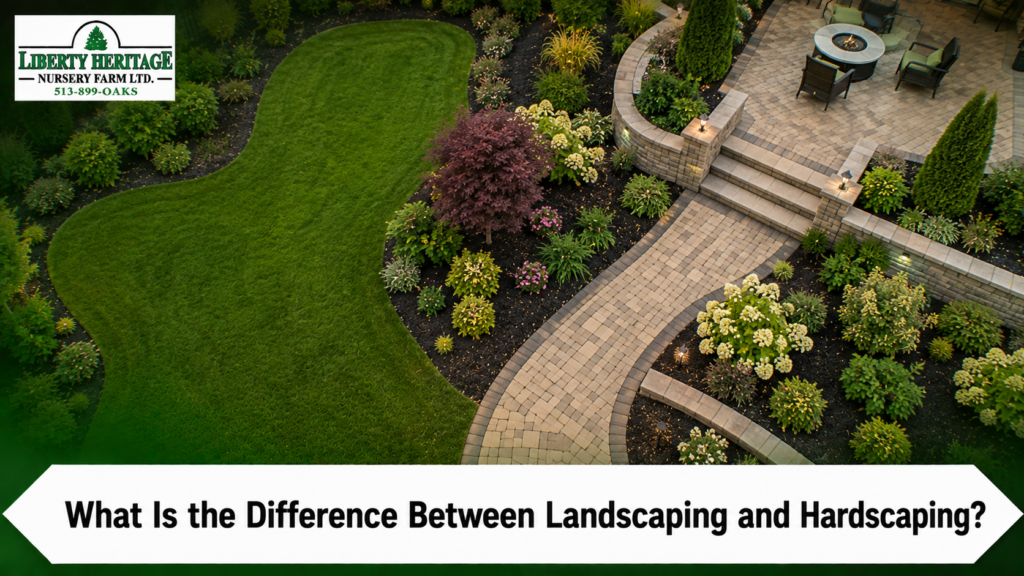
When homeowners plan an outdoor improvement project, they often hear the terms “landscaping” and “hardscaping.” While both play important roles in creating beautiful and functional outdoor spaces, many people are unsure of the difference between them.
Understanding the distinction is important because landscaping and hardscaping serve different purposes. One focuses on living elements such as plants, lawns, and trees, while the other focuses on permanent structures such as patios, walkways, retaining walls, and outdoor kitchens.
Whether you’re redesigning your backyard, improving curb appeal, or planning a complete outdoor transformation, knowing how landscaping and hardscaping work together can help you make better decisions and maximize your investment.
In this guide, we’ll explain the key differences between landscaping and hardscaping, discuss their benefits, compare costs, and help you determine which option is right for your property.
Quick Answer: What Is the Difference Between Landscaping and Hardscaping?
Landscaping refers to the living elements of an outdoor space, including grass, trees, flowers, shrubs, and gardens. Hardscaping refers to the non-living elements such as patios, walkways, retaining walls, driveways, fire pits, and stone features. Together, landscaping and hardscaping create a balanced and functional outdoor environment.
Understanding Landscaping
Landscaping includes all the living components that enhance the appearance and health of an outdoor space.
Common landscaping features include:
- Lawns
- Trees
- Shrubs
- Flower beds
- Ground cover plants
- Gardens
- Mulch beds
- Irrigation systems
The primary goal of landscaping is to enhance a property’s beauty, color, and texture and to provide environmental benefits.
Benefits of Landscaping
Landscaping offers numerous advantages:
- Improves curb appeal
- Increases property value
- Enhances air quality
- Provides shade
- Supports local wildlife
- Reduces soil erosion
- Creates a relaxing environment
A professionally designed landscape can completely transform the appearance of a home.
Understanding Hardscaping
Hardscaping includes all the non-living structures that add function and organization to outdoor spaces.
Common hardscaping features include:
- Patios
- Walkways
- Driveways
- Retaining walls
- Fire pits
- Outdoor kitchens
- Stone pathways
- Pergolas
- Decorative stonework
Hardscaping creates usable spaces and helps define different areas of a landscape.
Benefits of Hardscaping
Hardscaping provides practical and aesthetic benefits:
- Creates functional outdoor living areas
- Improves accessibility
- Reduces maintenance requirements
- Prevents erosion
- Enhances drainage
- Increases property value
- Adds long-term durability
Many modern outdoor designs rely heavily on hardscaping to create attractive entertainment spaces.
Landscaping vs Hardscaping: Key Differences
Comparison Table
| Feature | Landscaping | Hardscaping |
| Materials | Living plants and vegetation | Stone, concrete, brick, wood |
| Maintenance | Regular maintenance required | Lower maintenance |
| Purpose | Beauty and environmental benefits | Functionality and structure |
| Lifespan | Varies based on plant health | Often lasts decades |
| Cost | Varies by plant selection | Usually higher upfront cost |
| Water Requirements | Often requires irrigation | Minimal water needed |
This comparison highlights why both elements are essential for a complete outdoor design.
How Landscaping and Hardscaping Work Together
The best outdoor spaces combine landscaping and hardscaping.
For example:
Imagine a backyard that includes:
- A paver patio
- Decorative walkways
- Retaining walls
- Flower beds
- Shade trees
- Landscape lighting
The hardscape elements provide structure and functionality, while the landscaping softens the appearance and creates natural beauty.
Without landscaping, outdoor spaces can feel cold and uninviting.
Without hardscaping, outdoor areas may lack organization and functionality.
The combination creates balance.
Which Is More Important: Landscaping or Hardscaping?
There is no single answer because every property has different needs.
Landscaping May Be More Important If:
- You want to improve curb appeal
- You enjoy gardening
- You need shade
- You want more greenery
- You are focused on environmental benefits
Hardscaping May Be More Important If:
- You want outdoor entertainment areas
- You need walkways or patios
- You have drainage issues
- You want low-maintenance improvements
- You need erosion control
Most homeowners benefit from investing in both.
Cost Comparison: Landscaping vs Hardscaping
Budget is often a major consideration.
Landscaping Costs
Typical landscaping expenses include:
- Lawn installation
- Planting trees and shrubs
- Garden bed creation
- Mulching
- Irrigation systems
Smaller landscaping projects may cost a few thousand dollars, while complete landscape renovations can cost significantly more.
Hardscaping Costs
Hardscaping projects generally involve:
- Excavation
- Materials
- Skilled labor
Examples include:
- Patios
- Walkways
- Retaining walls
- Outdoor kitchens
Hardscaping often has a higher upfront cost but usually requires less maintenance over time.
Which Adds More Property Value?
Both landscaping and hardscaping can increase property value.
Landscaping Value Benefits
- Strong first impressions
- Better curb appeal
- Healthier outdoor spaces
- Improved neighborhood appearance
Hardscaping Value Benefits
- Increased functionality
- Outdoor living space
- Long-term durability
- Greater buyer appeal
Properties that combine professional landscaping and hardscaping often attract more attention from buyers.
Common Mistakes Homeowners Make
Focusing Only on Landscaping
Beautiful plants alone may not provide enough functionality.
Ignoring Hardscaping
Without walkways or patios, outdoor spaces can feel incomplete.
Choosing the Wrong Plants
Plants that struggle in local conditions create unnecessary maintenance challenges.
Poor Drainage Planning
Water problems can damage both landscaping and hardscaping.
Overcrowding Outdoor Spaces
Too many features can make a landscape look cluttered.
Professional planning helps avoid these issues.
How to Choose the Right Balance
When planning an outdoor project, consider:
Your Goals
Do you want:
- Better curb appeal?
- Outdoor entertaining space?
- Increased property value?
- Easier maintenance?
Your Budget
Balancing landscaping and hardscaping can help maximize results while staying within budget.
Property Conditions
Drainage, soil quality, slope, and available space all influence design decisions.
Long-Term Maintenance
Consider how much time and effort you want to spend maintaining your outdoor space.
Why Professional Design Matters
Professional landscapers understand how to combine landscaping and hardscaping effectively.
Benefits include:
- Better design planning
- Improved drainage solutions
- Efficient use of space
- Higher-quality installation
- Long-lasting results
Professional guidance often prevents costly mistakes and ensures that all elements work together harmoniously.
Real-Life Example
Imagine two similar homes.
Home A
- Basic lawn
- No walkways
- No patio
- Minimal landscaping
Home B
- Healthy lawn
- Decorative planting beds
- Stone walkway
- Outdoor patio
- Landscape lighting
- Retaining wall
Most buyers will immediately see greater value in Home B because it offers both beauty and functionality.
This example demonstrates how landscaping and hardscaping complement each other.
Final Thoughts
Understanding the difference between landscaping and hardscaping is essential for creating a beautiful and functional outdoor space.
Landscaping focuses on living elements such as grass, trees, flowers, and shrubs. Hardscaping includes permanent structures like patios, walkways, retaining walls, and outdoor kitchens.
Neither is more important than the other. The most successful outdoor spaces combine both elements to create balance, improve usability, increase property value, and enhance curb appeal.
Whether you’re planning a small upgrade or a complete outdoor renovation, investing in both landscaping and hardscaping can help you achieve lasting results and maximize the enjoyment of your property.
Frequently Asked Questions
What is landscaping?
Landscaping includes living outdoor elements such as grass, trees, shrubs, flowers, and gardens.
What is hardscaping?
Hardscaping includes non-living features such as patios, walkways, retaining walls, and driveways.
Is hardscaping part of landscaping?
Yes. Hardscaping is often considered a major component of overall landscape design.
Which costs more, landscaping or hardscaping?
Hardscaping typically has higher upfront costs due to materials and labor requirements.
Does hardscaping increase property value?
Yes. Patios, walkways, retaining walls, and outdoor living spaces often improve property value.